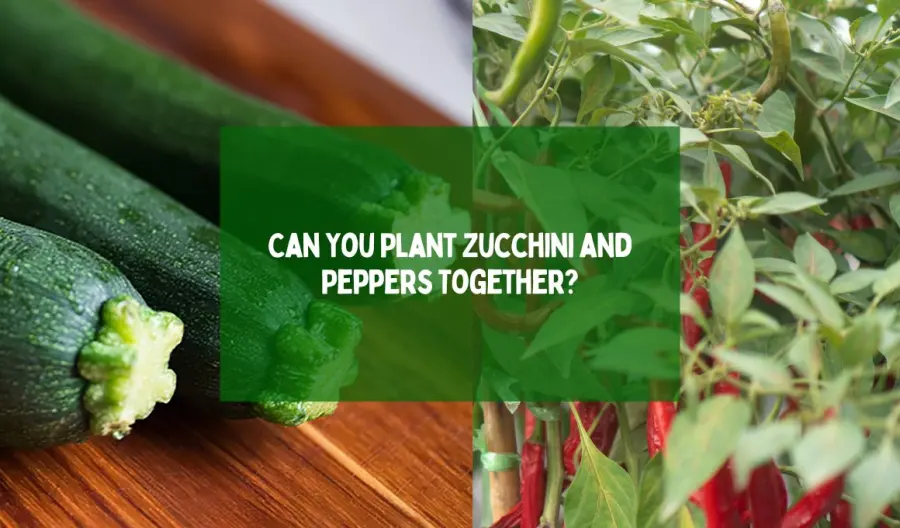
Zucchini and peppers can indeed be planted together as companion plants. In fact, they can complement each other and offer several benefits when grown in close proximity. However, it is essential to understand their compatibility, growth habits, and potential challenges to ensure a thriving garden.
In this article, we will find out the answer of "Can You Plant Zucchini and Peppers Together?"
Compatibility of Zucchini and Peppers
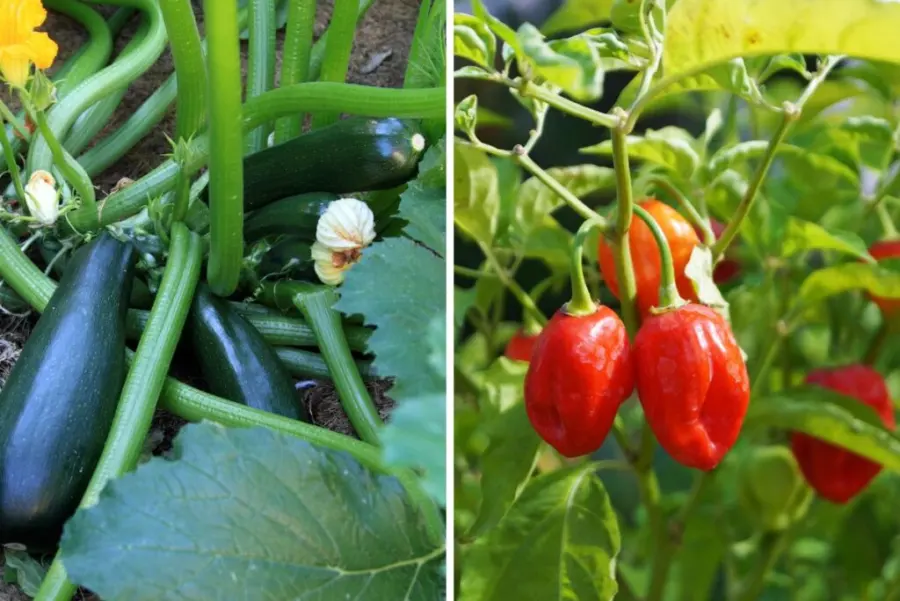
Both zucchini and peppers belong to the same plant family, the Cucurbitaceae family. This shared lineage makes them compatible companions in the garden.
They have similar growth requirements, including sunlight, soil type, and water needs, making cultivating them easier.
Complementary Zucchini and Peppers Growth Habits
Zucchini plants tend to have large leaves that provide shade to the surrounding soil. By planting peppers near zucchini, you can protect the delicate pepper plants from excessive sun exposure and help maintain soil moisture.
In return, the peppers can act as a natural trellis for the sprawling zucchini vines, providing support and preventing them from spreading too much.
Related Reading:
- Growing Zucchini And Tomatoes Together Companion Planting
- Can We Grow Zucchini And Eggplant Together?
- Best Zucchini Varieties To Grow In Containers
- How To Pollinate Zucchini Plants?
- A Complete Growing Guide for Zucchini Plant Care
Tips for Successful Zucchini and Peppers Companion Planting
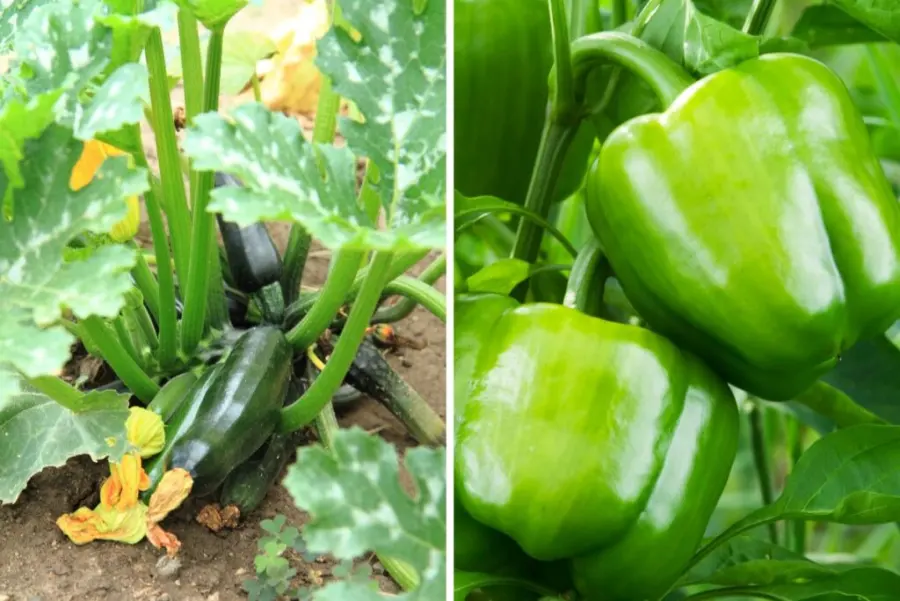
Planting different vegetables together can offer several advantages, such as efficient space utilization, natural pest control, and complementary growth patterns. Zucchini and peppers are well-suited to be planted together due to their similar soil, sunlight, and watering requirements.
However, there are a few considerations to keep in mind to ensure a harmonious coexistence and a bountiful harvest.
Soil Preparation
Both zucchini and peppers thrive in well-drained soil rich in organic matter. Prior to planting, prepare the soil by removing any weeds or debris and amend it with compost or well-rotted manure. This will provide the necessary nutrients for healthy plant growth and ensure good drainage.
Sunlight Requirements
Zucchini and peppers are sun-loving plants and require a minimum of 6-8 hours of direct sunlight per day. When choosing a garden bed, ensure it is located in an area that receives ample sunlight throughout the day.
Avoid planting them in the shadow of taller plants or structures that may obstruct their access to sunlight.
Spacing
Proper spacing is crucial to avoid overcrowding and promote optimal growth. Provide each zucchini plant with at least 2-3 feet of space, as they tend to spread their large leaves.
Pepper plants, on the other hand, require approximately 1-2 feet of space between each plant. This spacing allows for proper air circulation and reduces the risk of disease.
Companion Planting
Companion planting is the practice of strategically planting different species together to enhance growth and deter pests. Zucchini and peppers make great companion plants as they have complementary benefits.
Zucchini leaves provide shade and act as natural mulch, conserving soil moisture and reducing weed growth. The spiciness of peppers acts as a natural deterrent to pests that may affect zucchini plants.
Pest Management
Companion planting zucchini and peppers can also aid in pest management. Zucchini plants are susceptible to pests like squash bugs and cucumber beetles. However, the pungent aroma of peppers acts as a natural deterrent for these pests, reducing the likelihood of an infestation.
Conversely, zucchini plants can repel aphids, which are known to attack pepper plants. This mutually beneficial relationship can help keep pest populations under control.
Watering
Both zucchini and peppers require consistent watering to maintain healthy growth. Keep the soil evenly moist, but avoid overwatering, as it can lead to root rot. Mulching the soil around the plants can help retain moisture and regulate soil temperature, reducing water requirements.
Harvesting
Zucchini and peppers have different growth and harvesting patterns. Zucchini plants produce an abundance of fruit that should be harvested when they are young and tender, usually around 6-8 inches in length.
Peppers, on the other hand, start off green and change color as they mature. Harvest peppers when they reach their desired color, whether it's green, red, yellow, or any other variety-specific hue.
Related Reading:
- 7 Plants You Should Not Try Near Your Tomatoes and 4 You should
- Cucumber Companion Planting: What To Grow With Cucumbers And What To Not Grow
- 17 Plants You Can Grow With Carrots As Companions
- How to Grow Pumpkins in Pots?
- Growing Eggplant And Cucumbers Together Companion Planting
Conclusion
In conclusion, planting zucchini and peppers together can be a rewarding experience in your garden. They are compatible companions, benefiting each other through mutual pest management and complementary growth habits.
By following the tips provided and considering their specific needs, you can create a thriving garden and enjoy a bountiful harvest of zucchini and peppers. Happy gardening!
Timing Your Planting
Both zucchini and peppers are warm-season crops that have no tolerance for frost and grow poorly in cold soil. Peppers are actually the slower of the two to get going — they need warm soil to germinate reliably and are usually started indoors 6 to 8 weeks before the last frost, then transplanted out once nighttime temperatures stay reliably above roughly 55°F. Zucchini, by contrast, germinates quickly from seed sown directly in the ground once the soil has warmed, and it's often planted two to three weeks after peppers go in, right around the same time you'd set out tomatoes. Trying to rush either crop into cold spring soil tends to stall growth for weeks even if the plants eventually survive.
Companion Additions That Pair Well With Both
If you're building out the bed further, a few other plants get along with this pairing. Basil is a classic addition near peppers and is often credited with improving flavor and helping repel some flying pests, though its biggest benefit is simply making efficient use of space between larger plants. Marigolds are commonly tucked in around both zucchini and peppers for their reputed ability to deter nematodes and some flying insects. Avoid planting either of them too close to fennel, which tends to inhibit the growth of many neighboring vegetables, or near vining cucurbits that would compete directly with zucchini for the same growing space.
Plant Families and Why They Actually Matter Here
It's worth clarifying one thing for the garden bed: zucchini is a cucurbit (the same family as cucumbers, melons, and pumpkins), while peppers belong to the nightshade family alongside tomatoes and eggplant. They aren't botanical relatives, but that's actually part of why they pair well — because they come from different families, they aren't competing for exactly the same nutrients in the soil, and they don't share most of the diseases that spread quickly within a single plant family. Companion planting works best when you mix families like this rather than clustering everything from one family in the same bed.
Spacing That Actually Works
Zucchini and Peppers have very different footprints, and spacing mistakes are one of the most common reasons this pairing disappoints new gardeners. Zucchini plants sprawl — even "bush" varieties need 3 to 4 feet of space in every direction once mature. Pepper plants stay compact, typically needing only 18 to 24 inches between plants. Plant peppers too close to a zucchini's eventual mature spread and they'll be swallowed by leaves within a few weeks, cut off from the sunlight they need to set fruit. A good approach is to plant peppers along the outer edge of the bed and let zucchini take the center or back, where its size won't shade anything else you're growing.
Watering Differences to Watch
Zucchini is a thirsty plant with shallow, wide-spreading roots and big leaves that lose a lot of moisture through transpiration — it typically wants consistent, deep watering, especially once fruit starts forming. Peppers are more tolerant of drier soil and are actually prone to problems like blossom end rot when watering is inconsistent or excessive. If you're watering the bed as a single unit, use drip irrigation or soaker hoses so you can control moisture at each plant's base rather than overwatering the peppers to satisfy the zucchini, or underwatering the zucchini to keep the peppers happy.
Pest and Disease Patterns
Because zucchini and peppers come from different families, they don't share most major pests, which is a real advantage of planting them together instead of in single-crop blocks. Zucchini's main threats are squash vine borers, squash bugs, and cucumber beetles. Peppers are more likely to deal with aphids, pepper weevils, and hornworms. Keep an eye on both independently rather than assuming one pest-control routine covers both plants — a treatment aimed at squash bugs, for instance, won't do anything for aphids on your peppers.
Frequently Asked Questions
Do zucchini and peppers compete for nutrients?
Some competition is inevitable with any two plants sharing a bed, but it's manageable. Zucchini is a heavy feeder, particularly for nitrogen, while peppers need more moderate, balanced feeding with a bit less nitrogen once they start flowering — too much nitrogen on peppers produces lush foliage at the expense of fruit. Side-dress the zucchini separately with compost or a nitrogen-rich feed rather than fertilizing the whole bed uniformly.
Can pepper plants really support sprawling zucchini vines?
Not in the way a true trellis would. Pepper stems are sturdy but not tall or rigid enough to bear the weight of zucchini vines and fruit. Think of the relationship as mutual shading and ground cover rather than structural support — if you want to keep zucchini vines off the ground, a dedicated cage or trellis works far better than relying on nearby pepper plants.
What's the most common mistake gardeners make with this pairing?
Underestimating how big zucchini gets. Gardeners often plant peppers at what looks like a safe distance in early spring, when the zucchini seedling is just a few inches tall, without accounting for how wide the mature plant will spread by midsummer. By the time the zucchini leaves are a couple of feet across, nearby peppers can end up shaded out and stunted. Plan spacing around the zucchini's full mature size from the start, not its size on planting day.
Watering Considerations for Zucchini and Peppers
Zucchini and peppers don't have identical water needs, and overlooking that can hold back one crop while you're tending to the other. Zucchini has relatively shallow roots and performs best with consistent moisture, roughly 1 to 2 inches of water per week, especially once fruit is forming. Peppers, on the other hand, tend to do better with slightly drier conditions between waterings; soil that stays too consistently wet around peppers increases the risk of root rot and can contribute to blossom end rot on the fruit. Rather than watering the whole bed on one schedule, run separate drip lines or water each plant individually so zucchini gets the steady moisture it wants without over-saturating the peppers next to it.
Crop Rotation and Container Growing Notes
Zucchini belongs to the Cucurbitaceae family while peppers are part of the Solanaceae, or nightshade, family, so rotating them through the same bed from year to year is fine — just avoid following either crop with another member of its own family the next season, since that's when soil-borne pests and diseases tend to build up. If you're growing in containers rather than in-ground, keep in mind that zucchini needs a large pot, generally 15 gallons or more, to accommodate its root system and sprawling growth, while peppers can thrive in a 5-gallon container. It's usually better to give each its own pot placed nearby rather than combining both in one container, where the zucchini's large leaves can quickly overshadow a smaller pepper plant.
Do Zucchini and Peppers Compete for Nutrients?
They can, if planted too close together. Both are moderate-to-heavy feeders: zucchini draws heavily on nitrogen to support its large leaves, while peppers need steady phosphorus and potassium to develop fruit well. Side-dress each plant separately with compost or a balanced fertilizer rather than feeding the bed as a whole, and keep enough space between them that their root zones aren't fully overlapping.
Can You Grow Zucchini and Peppers in the Same Raised Bed?
Yes, as long as the bed is large enough to give each plant its recommended spacing. A standard 4-by-8-foot raised bed can comfortably hold one or two zucchini plants along one edge and several pepper plants along the rest, provided the zucchini doesn't shade the peppers as it fills out. Position taller pepper varieties or the zucchini itself so neither blocks the other's sunlight as the season progresses.
Is There an Ideal Time to Plant Zucchini and Peppers Together?
Both are warm-season crops, but they don't establish at the same pace. Wait until the soil has warmed past 60°F and all danger of frost has passed before transplanting either one. Peppers are slower to get going and appreciate consistently warm soil, so many gardeners start pepper seedlings indoors a few weeks earlier than zucchini and transplant both out around the same time once conditions are right. Rushing peppers into cold soil tends to stall their growth for weeks, even if the zucchini nearby is already taking off.